Retaining walls are a useful and often important part of landscaping. While they can be used to create visual interest in an outdoor space, many times they are necessary to control drainage and keep your yard structurally sound.
Table of Contents
Why build a retaining wall?
Create additional usable space
Installing retaining walls is a great way to level out areas for a wide variety of uses. Perhaps you’d like a paver patio, a flat area to do vegetable gardening, a level area for a play structure, or even a simple area for grass.
Prevent erosion or damage from drainage
When planning your retaining walls, the positive drainage, or drainage that directs water away from your home, is the most important consideration. Walls can be used to properly direct the flow of water. Sloped areas are particularly susceptible to erosion from water runoff and walls can help control this. In the case of the Manitou Incline, a famous trail with very steep grades that Timberline reconstructed, walls were installed to direct water and keep the trail from literally washing away.
Terrace a slope & provide stability
Retaining walls provide a fantastic solution for creating level spaces in a sloped area. This can be used to create planting beds, level areas to create outdoor living space, and keep your slope structurally stable.
Decorative

Adding a wall to your landscape design can provide visual interest and add beautiful texture and layers to the look of your finished installation. Some walls, such as freestanding seating walls, are designed to be purely decorative and not to actually “retain” anything.
Materials available
Timber
While timber is usually one of the least expensive options for constructing a retaining wall, it is not the most sustainable and often will not last as long as those constructed with other materials. Timber and other wood naturally breaks down over time, especially when exposed to water, causing it to lose structural integrity. Even timbers that are treated with weather resistant coating will not last forever.
Natural Stone
Dry-stacked or boulder walls fall into this category and provide a very natural, rustic look. When constructed properly, these walls are a sustainable option.
Manufactured Block
These walls provide a clean look using manufactured block. The color and style options are numerous and the walls are long-lasting.
Veneer Walls
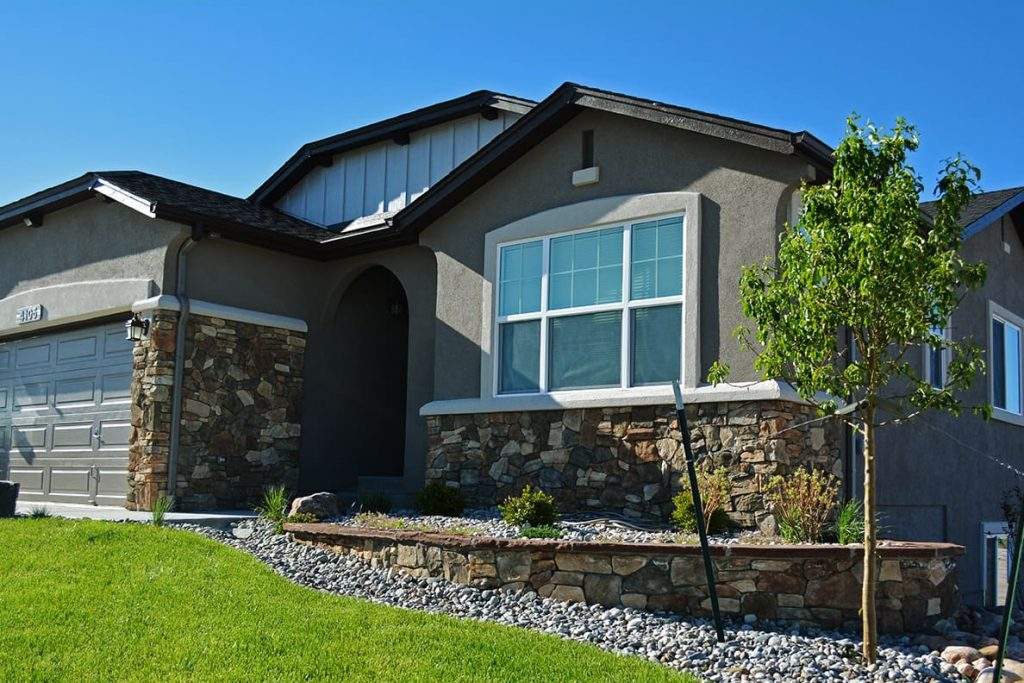
Veneered walls are constructed by creating a solid core of CMU block with a stone veneer over the top. The core creates an incredibly strong wall and the veneer provides a luxurious finish. As with manufactured block, the color and texture possibilities are plentiful. They strength and finished look make these walls the most expensive option.

Image Courtesy of Landscaping Network
Construction considerations
Stability
Soils move, and depending on your soil type and wall type this must be taken into account when your wall is constructed. A wall without a solid foundation will lose integrity over time and may collapse. Ask your contractor what type of footer is recommended or if a footer is even necessary for your soil and wall type.
Veneered walls require an underground footer that extends below frost level, which in Colorado Springs is a full 30 inches. Block walls should have a gravel base and bottom blocks may need to be buried partially underground as well. When using natural stone, height of your wall should be relative to the size of rock used as larger, heaver rock provides more stability for a taller wall. For a timber wall rebar and “dead men” should be used to anchor the wall.
Drainage
Ensure that drainage is taken into account and drains are installed if the area is wet. These will run behind or may even extend through the wall in areas. Downspouts coming off roofs should be routed through the wall to daylight.
Batter
When a wall is designed to hold up a slope and effectively retain the soil behind it, it will not be 100% vertical, and should slightly lean back. This is called the batter of the wall and provides additional structural stability.
Fabric
At Timberline, we recommend and practice the installation of weed barrier fabric behind our retaining walls. This aids in controlling soils from washing through your retaining wall.
Ready to add a retaining wall at your home or business? Contact us today